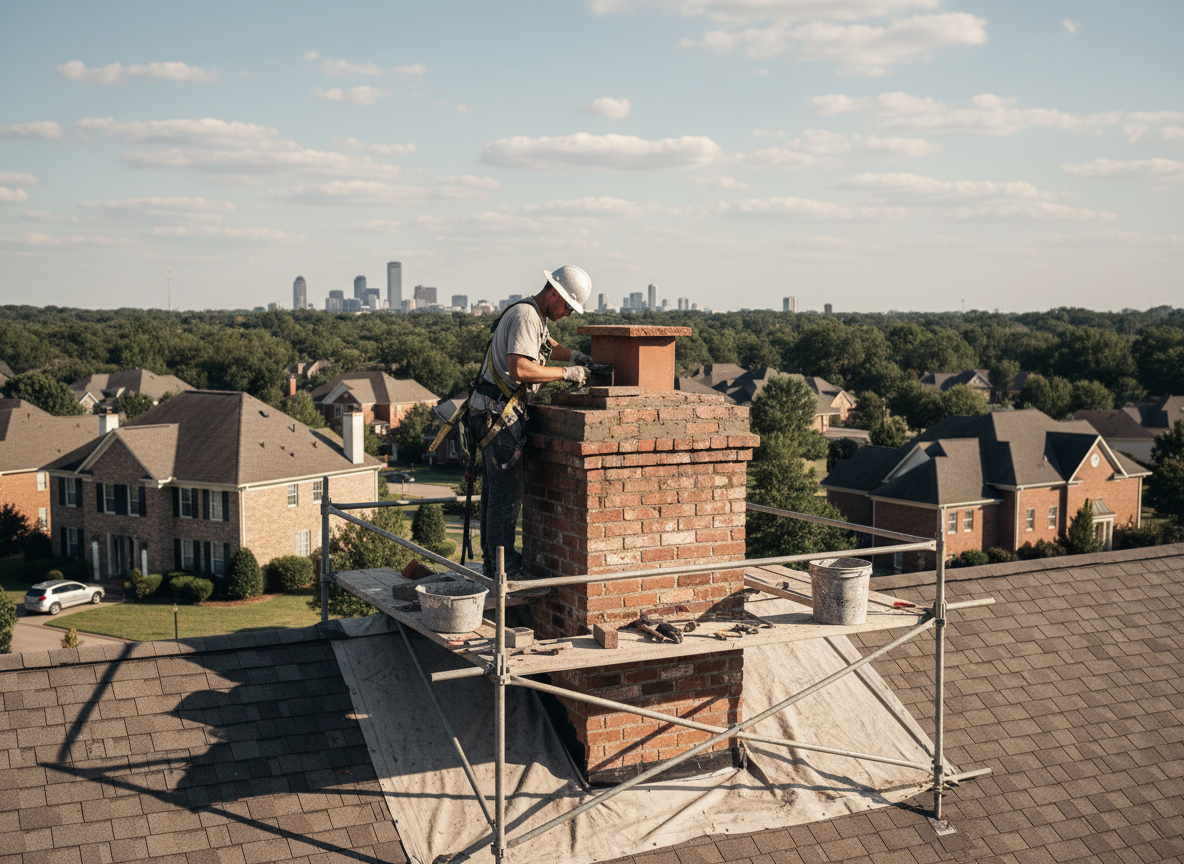
Montgomery homes built before the 1980s often feature masonry chimneys tied into the original brick or stone structure. These chimneys face repeated stress from Ohio winters where daytime thaw followed by overnight freeze expands moisture trapped in mortar joints. Over time the crown cracks, the flue liner spalls, and water migrates into the attic or against interior walls. A repair that only patches the visible crown without addressing the flue or flashing usually fails within two seasons.
When we arrive at a Montgomery address we first check the condition of the clay flue tile and the condition of the chimney cap. Many homes in the Kenwood and Blue Ash corridors still have unlined or partially lined flues that were acceptable when the houses were built but now violate current IRC requirements for gas appliances. We document every joint and photograph hidden damage so the homeowner sees exactly what must be replaced versus what can be pointed.
Terrain around Montgomery slopes gently toward the Little Miami River corridor. This creates runoff patterns that push water against foundation walls and up into chimney bases during heavy spring rains. Repairs therefore include re-grading the soil line at the chimney base and installing proper step flashing where the roof meets the chimney. Skipping this step is the most common reason a new crown leaks again within a year.
All work is performed from the roof and from inside the attic when needed. We never leave a chimney open overnight in Montgomery winters, so temporary weatherproofing is installed the same day any flue section is removed.
Technician insight
In Montgomery, the thing that catches most people out with Residential chimney repair is how quickly freeze-thaw cycles destroy the mortar in Hamilton County brick chimneys built before 1975. Homeowners often notice only interior stains and assume a new crown will fix it, but the real failure is usually hidden flue tile damage that lets water run straight down the chase.
Water Intrusion Through Crown in Montgomery
A Montgomery homeowner reported ceiling stains after a January thaw. Inspection showed a cracked crown and spalled flue tiles allowing meltwater into the chase. We rebuilt the crown, replaced three damaged flue sections, and re-flashed the roof intersection. No further staining occurred the following spring.
How it works
- 1
Site Inspection
We examine the crown, flue, flashing and interior chase from both roof and attic to locate active leaks and deteriorated mortar.
- 2
Damage Mapping
Every affected joint and tile is photographed and marked so the homeowner understands the full scope before any work begins.
- 3
Targeted Repair
Cracked crowns are rebuilt with proper slope, spalled flue tiles are replaced, and new corrosion-resistant flashing is installed at the roof line.
- 4
Final Test And Cleanup
We run a water test, verify draft, and remove all debris from the roof and yard before leaving the property.
Pricing
Upfront quotes provided after on-site inspection; final price depends on chimney height, extent of flue damage and roof access.