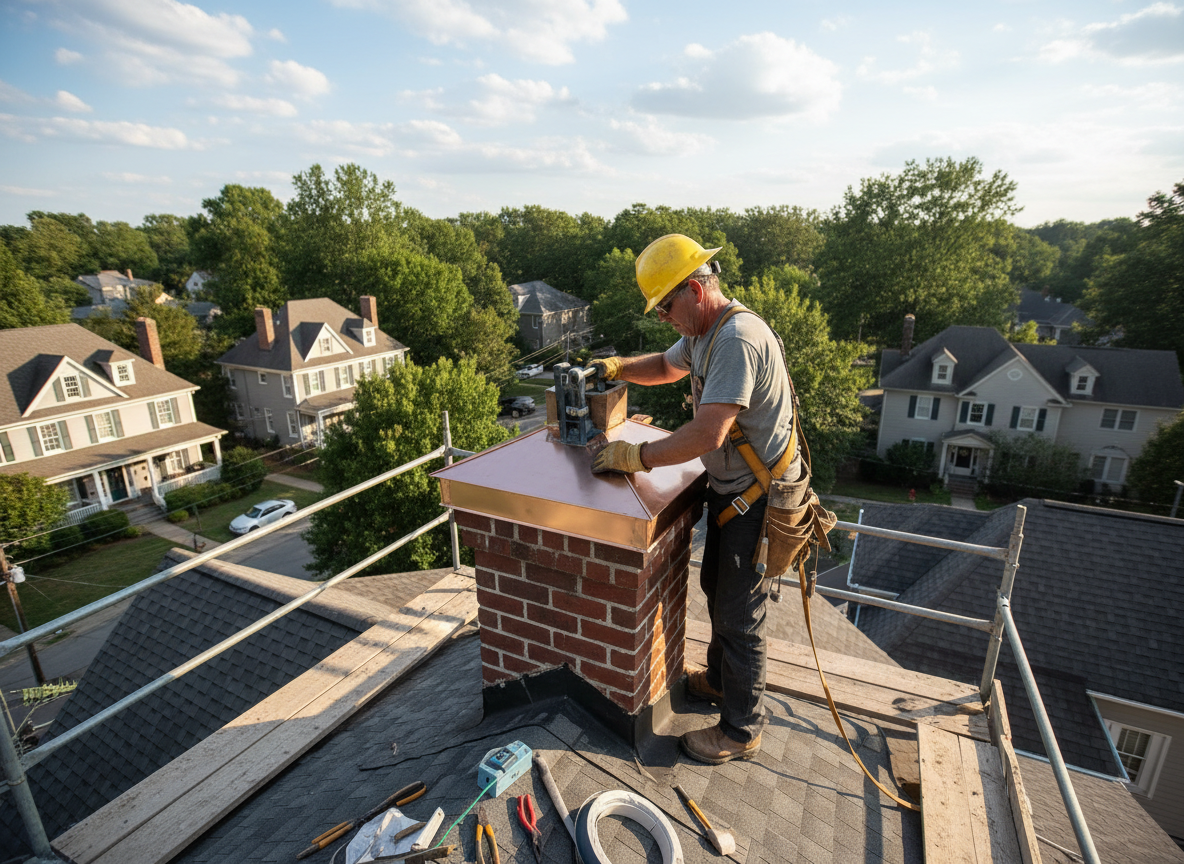
Chimney caps in Montgomery homes often suffer from rust, loose flashing, or cracked masonry due to the region's freeze-thaw cycles and older brick construction common in neighborhoods around Montgomery. Homeowners notice water stains in attics or smoke backdrafting when the cap no longer seals properly. Repair involves inspecting the flue crown, replacing corroded mesh or lids, and resealing joints with high-temperature materials that hold up to local wind and precipitation patterns.
Access challenges arise on two-story homes with steep roofs typical in the Montgomery area, where scaffolding or extension ladders must be positioned carefully around mature trees and narrow driveways. Technicians check for underlying issues like deteriorated clay flue liners or shifted crowns before any cap work begins. Skipping these steps leads to repeated leaks even after a new cap is installed.
Montgomery building practices require caps to maintain proper draft while preventing animal entry, especially during cooler months when creosote buildup accelerates. Repairs focus on matching the existing chimney style to preserve appearance and function without altering the structure. Owners should inspect caps after major storms to catch small bends or missing screws before they allow significant water intrusion.
Technician insight
In Montgomery, the thing that catches most people out with chimney cap repair is how quickly water gets past a bent or rusted cap on the older brick chimneys that dominate the housing stock here; the freeze-thaw cycles around Montgomery turn a small gap into interior staining fast if the crown isn't addressed at the same time.
Rusted Cap on Two-Story Home
Water stains appeared in an upstairs ceiling after heavy rain. Inspection showed the original cap had rusted through at the seams and allowed water past the crown on a 1970s brick chimney. The cap was replaced, joints resealed, and the crown patched to restore proper runoff.
How it works
- 1
Initial Inspection
Technician examines the cap, crown, and flashing on site at the Montgomery property to identify rust, cracks, or loose components.
- 2
Material Assessment
Existing cap type and condition are evaluated along with surrounding masonry to determine whether repair or targeted replacement is needed.
- 3
Repair Execution
Damaged mesh, lid, or brackets are replaced and sealed using weather-resistant components suited to Montgomery conditions.
- 4
Final Testing
Draft is checked and water runoff is verified to confirm the cap functions correctly before leaving the job.
Pricing
Cost depends on chimney height, extent of corrosion, and whether additional masonry work is required.