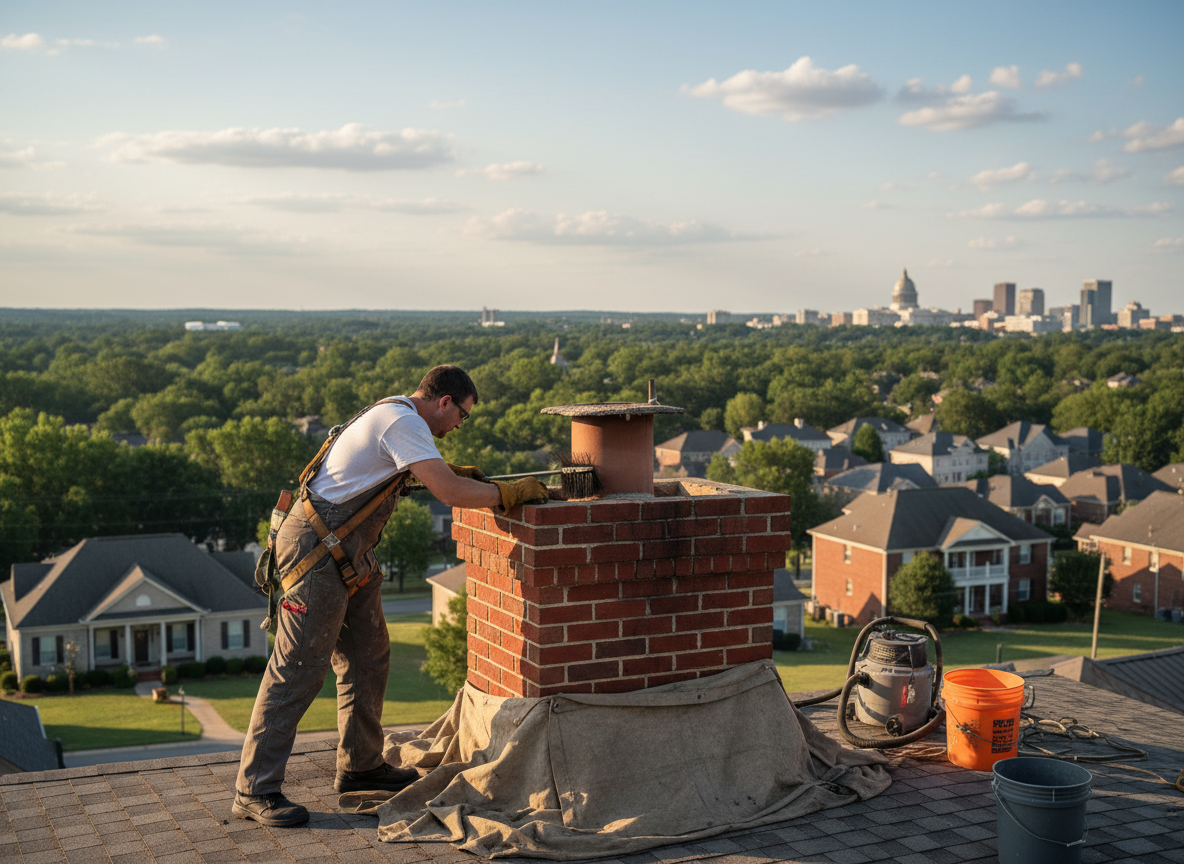
Chimney maintenance in Montgomery requires attention to brick and mortar joints that weather quickly from regional humidity and temperature swings. Older housing stock throughout the county often features chimneys built before modern flue liners, so annual checks for spalling and gaps prevent water intrusion that leads to interior leaks. Homeowners in areas like Montgomery proper and nearby communities see draft problems when creosote hardens on cooler days, reducing efficiency and raising carbon monoxide risks if left unchecked.
Routine maintenance includes removing debris from the flue, verifying damper operation, and checking crown condition to stop rainwater entry. In the Montgomery area, tree cover around many properties increases the chance of nesting material or leaf buildup, which can block airflow and accelerate corrosion on metal components. Technicians inspect for hairline cracks that expand during freeze-thaw cycles common in winter, addressing them before they allow exhaust to escape into living spaces.
Proper upkeep also covers the smoke chamber and hearth area, where settling from local soil conditions can shift the structure over time. Skipping these steps often results in more extensive repairs later, especially on chimneys serving wood-burning fireplaces in older Montgomery residences. Consistent service keeps the system compliant with basic safety expectations without requiring major reconstruction.
Technician insight
In Montgomery, the thing that catches most people out with chimney maintenance is how quickly rainwater seeps through aging mortar on brick chimneys built before the 1980s, especially on homes near low-lying spots where soil stays damp longer after storms.
Draft Loss After Heavy Rains
A Montgomery homeowner reported weak draft and occasional smoke in the room after recent storms. Inspection revealed saturated mortar joints and minor crown cracks allowing water to pool inside the flue. We cleaned the buildup, pointed the joints, and resealed the crown. The chimney now draws properly with no further moisture issues.
How it works
- 1
Initial Assessment
Technician examines the full chimney exterior and interior from the roofline to the firebox, noting any visible wear or blockages.
- 2
Cleaning and Debris Removal
Creosote, soot, and nesting material are cleared using appropriate tools to restore proper draft.
- 3
Component Inspection
Damper, flue, crown, and flashing receive close review for cracks, corrosion, or separation.
- 4
Minor Repairs and Sealing
Small mortar repairs and sealant applications are completed on site to protect against moisture.
- 5
Final Verification
System is tested for draft and safety before the homeowner receives a detailed summary of findings.
Pricing
Pricing varies by chimney height, access difficulty, and condition found during inspection; upfront quotes provided after assessment.