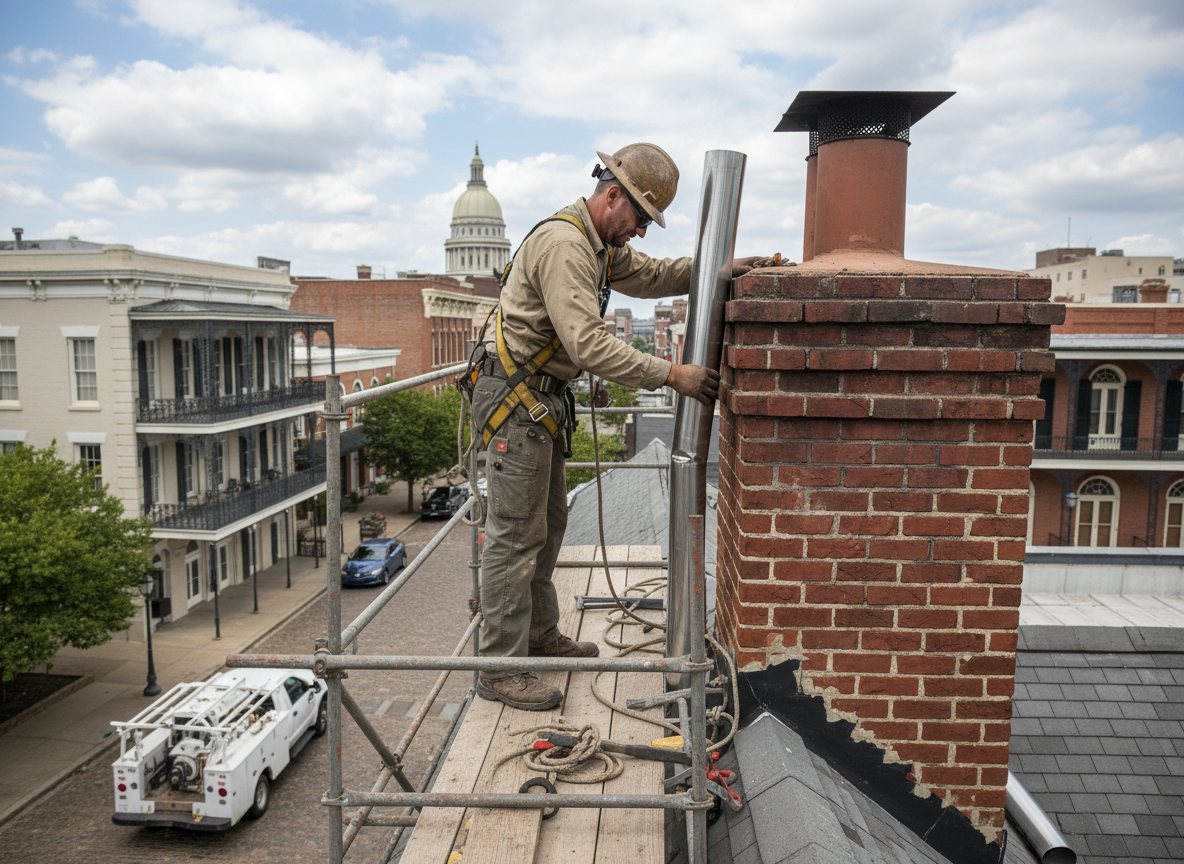
Montgomery's older brick homes, especially those built before 1960 in neighborhoods near the Alabama River, often have unlined or deteriorated clay flues that cannot handle today's wood-burning appliances. Relining with stainless steel or cast-in-place materials restores proper draft while sealing against moisture that seeps through porous brick during the region's frequent summer thunderstorms and winter freezes.
High local humidity accelerates creosote accumulation inside flues, and heavy downpours can force water through cracks in chimneys on homes along Perry Hill or in the Capitol Heights area. A proper reline uses insulated liners sized to the appliance and existing flue dimensions, preventing both carbon monoxide leakage and water damage to interior walls.
Local building practices require that any relining work maintain the required clearance to combustibles and meet flue sizing rules under the International Residential Code adopted in Montgomery County. Skipping a thorough camera inspection before liner installation commonly leads to hidden offsets or partial blockages that only appear after the first hard rain.
Homeowners in Montgomery often discover the need for relining when they notice white staining on exterior brick or smell smoke in upper rooms during the first cold snap. Addressing the flue before peak heating season avoids emergency calls when temperatures drop and wood stoves run daily.
Technician insight
In Montgomery, the thing that catches most people out with chimney relining is how fast summer humidity and river moisture push water through old brick joints around the Capitol Heights and Perry Hill homes, rotting the flue from the outside in before homeowners notice white staining on interior walls.
Relining on a Perry Hill Brick Chimney
Homeowner reported smoke in the upstairs bedroom after heavy rain. Camera showed multiple cracks and water pooling at an offset in the 1940s flue. We installed an insulated stainless liner sized to the wood stove, sealed the crown, and restored draft. No further water intrusion or smoke smell occurred during the next winter heating cycle.
How it works
- 1
Initial Camera Inspection
We scope the full flue from top to bottom to map cracks, offsets, and creosote load.
- 2
Measurement and Sizing
Exact liner diameter and length are calculated to match the appliance and existing chimney dimensions.
- 3
Liner Installation
Stainless steel or cast-in-place material is installed and cured according to manufacturer specs.
- 4
Final Draft and Leak Test
We verify proper draft, seal all connections, and confirm no water intrusion remains.
Pricing
Upfront quotes after on-site inspection; price driven by chimney height, liner material, and access conditions.