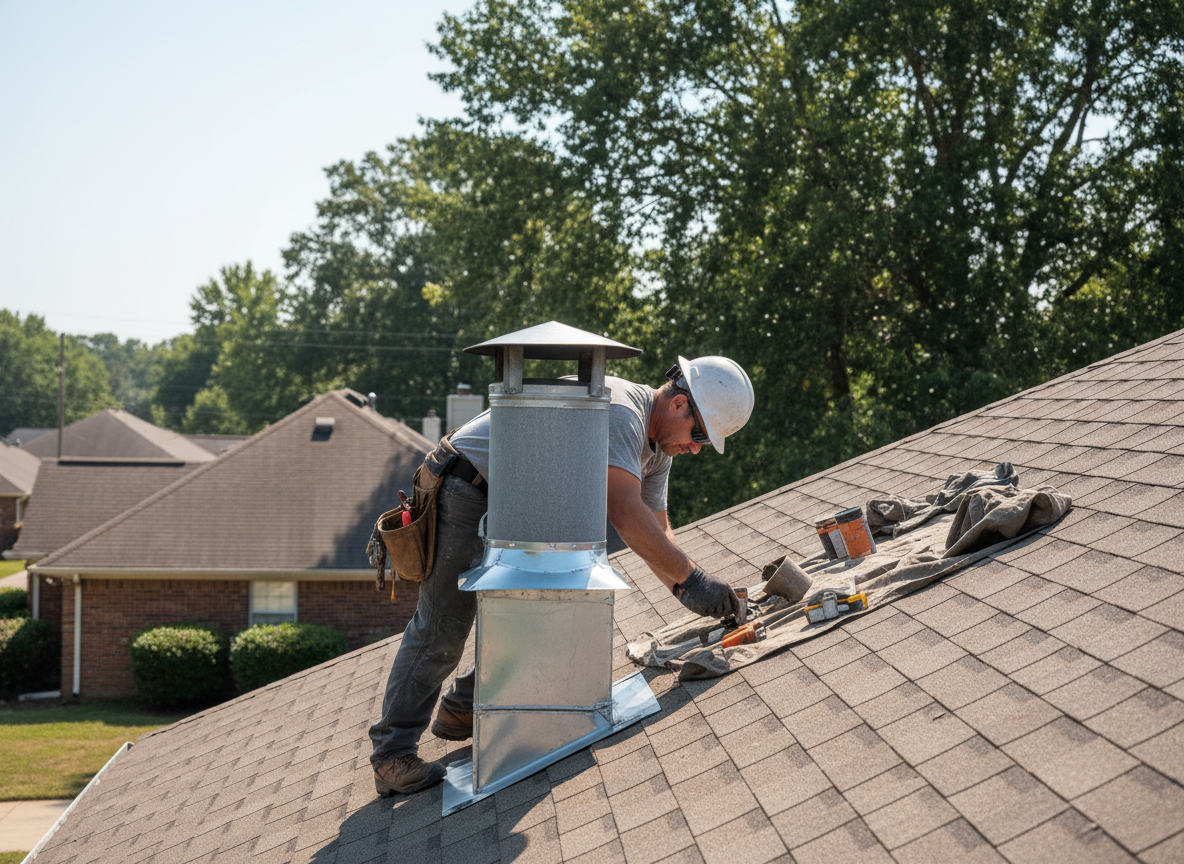
Prefabricated chimneys in Montgomery homes often consist of factory-built metal sections that require precise matching during repairs to maintain proper draft and prevent creosote buildup. These systems differ from masonry because the joints and seams can separate from repeated heating and cooling, especially when homes sit on the rolling terrain common in Hamilton County. Technicians must inspect the entire chase and flashing where the chimney exits the roof, as water intrusion at those points quickly corrodes the inner liner.
When a prefabricated unit develops a crack or separation, the repair typically involves removing the damaged section and installing a manufacturer-approved replacement rather than patching. Homeowners in neighborhoods around Montgomery frequently overlook the need to verify that the new section carries the same UL listing as the original, which can affect insurance coverage and code compliance during resale. Proper sealing at every joint with high-temperature silicone rated for continuous 2100-degree exposure prevents future leaks that would otherwise travel down the exterior wall.
Common Failure Points in Prefabricated Systems
Local weather patterns of rapid temperature swings accelerate wear on the outer casing and rain cap. Technicians check the chimney’s support brackets anchored to the framing because settling soil around foundations in the area can shift the entire assembly out of plumb over time.
Seasonal Considerations for Montgomery Homeowners
Before winter arrives, inspect the prefabricated chimney for gaps at the roofline where ice dams form. Addressing these issues early avoids emergency calls when the first cold snap arrives and the system is needed daily.
Technician insight
In Montgomery, the thing that catches most people out with prefabricated chimney repair is how quickly the thin metal liners corrode once water gets past the flashing on homes built on the slight slopes common in Hamilton County; the fix always requires pulling more sections than the homeowner expects because the corrosion travels upward inside the chase.
Separated seam on two-story prefabricated chimney
Homeowner noticed smoke odor in an upstairs bedroom after heavy rain. Inspection revealed a separated seam two sections below the roofline allowing water to run down the liner. Crew removed the upper three sections, installed new matching pipe, and resealed the roof flashing. Draft returned to normal and no further odor occurred.
How it works
- 1
Initial Assessment
Technician examines the prefabricated chimney from base to cap, checking for seam separation, corrosion, and draft issues.
- 2
Section Removal
Damaged segments are carefully extracted while protecting surrounding roofing and siding materials.
- 3
Component Replacement
New UL-listed sections are installed with correct clearances and secured per manufacturer specifications.
- 4
Sealing and Testing
All joints receive high-temperature sealant, then the system is tested for proper draft and safety.
Pricing
Pricing varies by chimney height, number of sections needing replacement, and access difficulty on the roof.