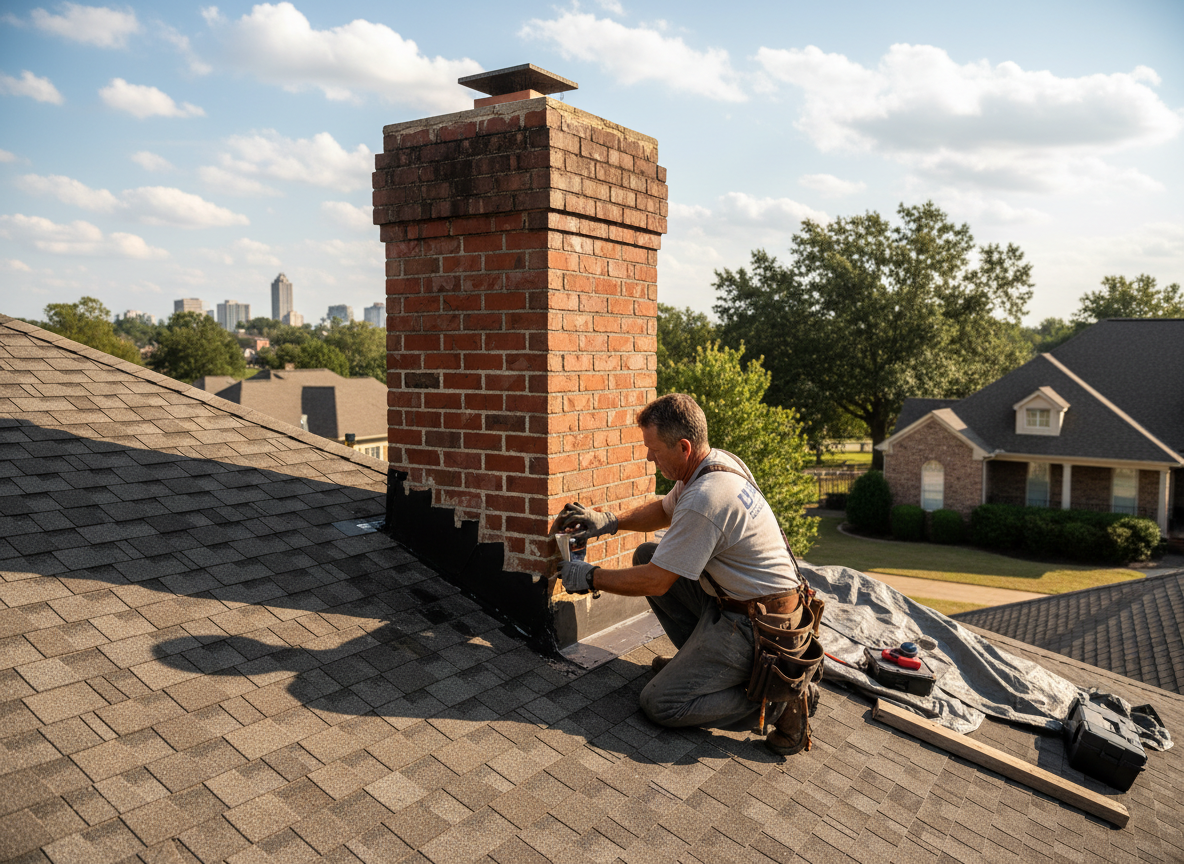
Chimney leaks often start at the crown or where flashing meets the roof deck on older brick homes common in Montgomery. Water finds paths through deteriorated mortar or cracked clay liners, especially after repeated freeze cycles that open small gaps. Proper repair requires removing loose material, installing a new concrete or metal crown with proper slope, and resealing step flashing without disturbing the existing roof membrane.
Edge cases include leaks that travel down the flue and appear inside the firebox or on interior walls two stories below the roofline. In these situations the technician must trace the water path with a moisture meter rather than assuming the obvious entry point. Code considerations in the Montgomery area require maintaining proper clearances and using UL-listed liners when any liner replacement occurs during leak work.
Homeowners sometimes attempt to stop leaks with caulk alone, which fails within a season because it cannot accommodate the movement between the chimney and roof. A durable fix always addresses both the crown and the flashing interface and includes a water test after completion to confirm the repair before any interior drywall restoration begins.
Technician insight
In Montgomery, the thing that catches most people out with chimney leak repair is how the older brick chimneys on homes built before the 1970s have crown cracks that let water run down the flue for years before anyone notices interior staining.
Hidden Leak on Montgomery Brick Chimney
Water was staining the ceiling below the chimney during storms. Inspection showed a cracked crown and failed flashing on the north side. The crown was rebuilt with proper slope and flashing resealed. Follow-up testing confirmed no further entry.
How it works
- 1
Initial Assessment
Inspect the crown, flashing, and interior for active moisture and map the leak path.
- 2
Material Removal
Take out damaged crown sections and loose mortar while protecting the roof surface.
- 3
Crown and Flashing Work
Install new crown with correct pitch and reseal or replace step flashing as needed.
- 4
Testing and Cleanup
Run a controlled water test and restore any disturbed areas before leaving the site.
Pricing
Upfront quotes provided after on-site inspection; cost driven by access, extent of crown damage, and whether liner work is required.