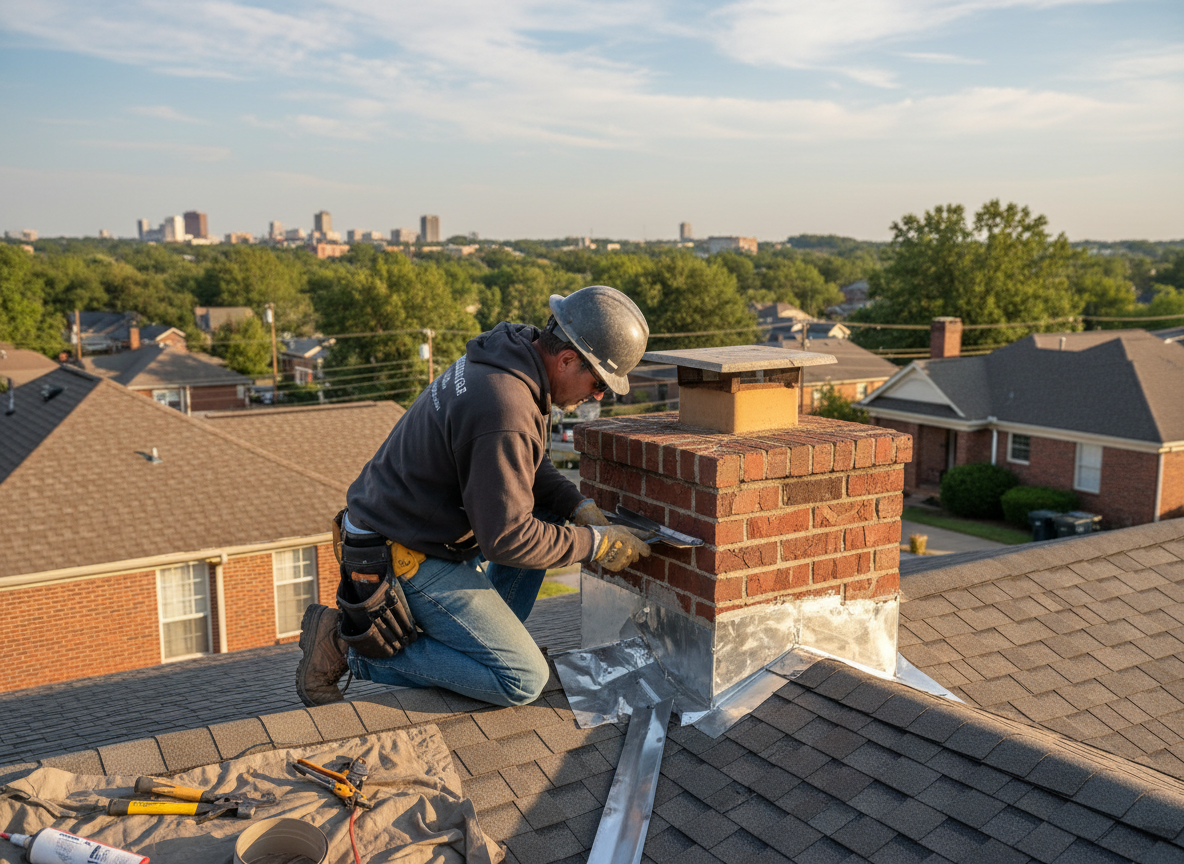
Montgomery sits in Hamilton County with many split-level and ranch homes built between the 1950s and 1970s. Their chimneys often meet asphalt-shingle roofs at angles that collect debris and ice. When the original step flashing or counter flashing corrodes, meltwater runs behind the masonry and soaks ceiling joists above the family room or upstairs hallway. We cut out the failed metal, install new 26-gauge galvanized sections, and weave them into existing shingles so the repair matches the roof slope exactly.
Winter freeze-thaw cycles in the Montgomery area push water under any gap larger than a pencil lead. Summer thunderstorms then drive the same moisture deeper into the chimney chase. Homeowners notice brown stains on drywall first, then musty smells after the rain stops. Proper flashing repair requires removing several courses of shingles, checking the cricket or saddle for rot, and installing new flashing before the shingles go back. Skipping the cricket inspection is the most common reason repairs fail within two seasons.
We also address the transition where the chimney meets a cedar shake or metal roof on older properties near Blue Ash and Loveland. These roofs expand and contract differently than the brick, so we use a flexible butyl tape under the counter flashing instead of standard caulk. The tape stays pliable through the temperature swings common along the Little Miami River valley and prevents the small cracks that let wind-driven rain enter.
Common Materials We Replace
Step flashing, counter flashing, cricket pans, and sealant beads are swapped on every job. We match the existing metal gauge so the new sections lie flat and do not telegraph through the shingles.
Technician insight
In Montgomery the thing that catches most people out with chimney flashing repair is the hidden cricket behind the chimney on 1960s split-levels. Homeowners see the stain on the ceiling but never realize the small valley behind the stack is packed with leaves and holds water every spring thaw. Once we open it we usually find the original plywood has delaminated and the step flashing has rusted through from the back side.
Hidden Cricket Leak on Windward Drive
Water stains appeared on the second-floor ceiling after a March thaw. We found the cricket behind the chimney was full of wet leaves and the original flashing had rusted from the underside. We rebuilt the cricket with new plywood, installed fresh step and counter flashing, and wove the shingles back into place. No further leaks appeared after the next heavy rain.
How it works
- 1
Site Assessment
We walk the roof from both sides, check attic insulation for wet spots, and note the chimney height relative to the ridge.
- 2
Flashing Removal
Shingles are lifted in numbered courses, old flashing is cut out, and any rotted sheathing is replaced before new metal is set.
- 3
New Flashing Installation
Galvanized step flashing is woven into the roof, a new counter flashing is mortared into the chimney joints, and the cricket is rebuilt if needed.
- 4
Weatherproofing and Cleanup
All seams receive butyl tape, shingles are nailed back, and debris is removed from gutters and the yard.
Pricing
Cost depends on roof pitch, chimney height, and whether rotted sheathing or a damaged cricket must be rebuilt.