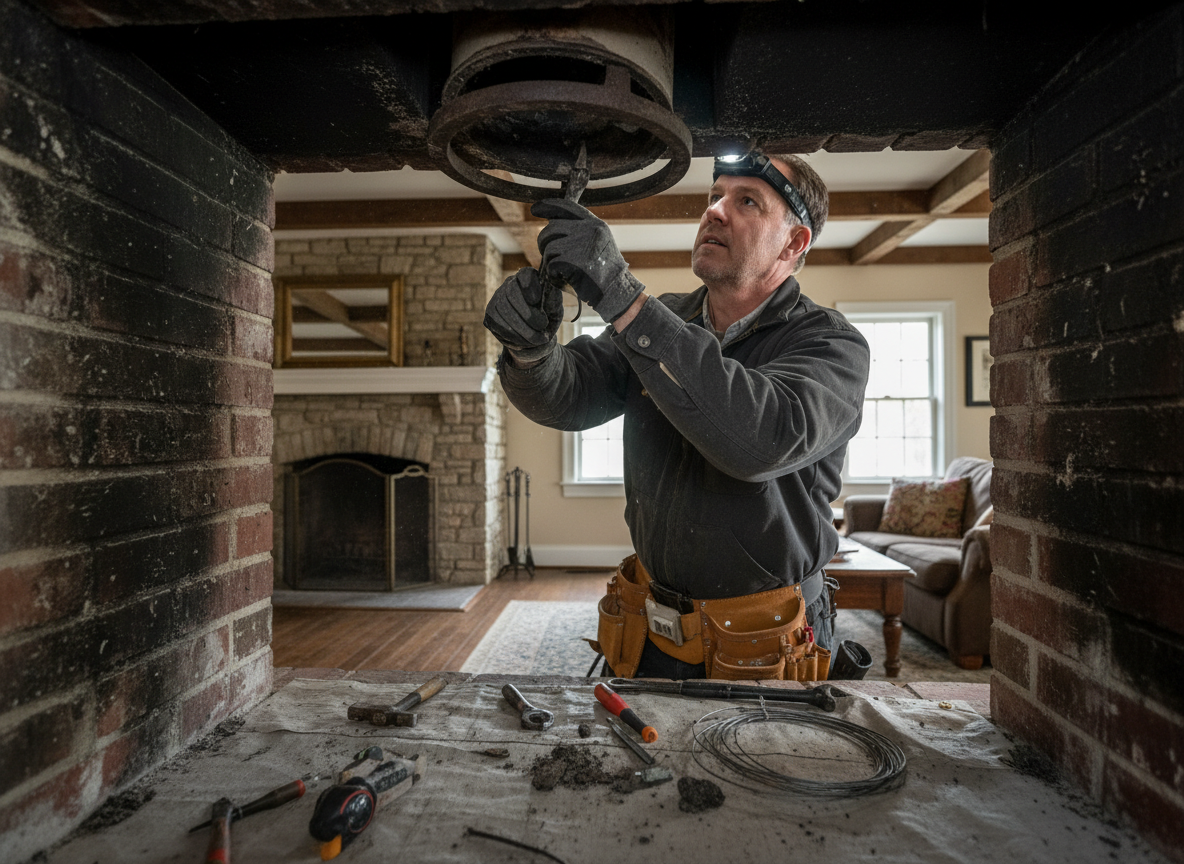
Chimney dampers in Montgomery homes often seize from years of soot buildup and temperature swings that warp the metal plate inside the flue. Older brick chimneys common in the area around Montgomery and Blue Ash frequently have warped frames that prevent a tight seal, allowing cold air to pour into living spaces during winter. A technician checks the pivot bar, spring tension, and throat alignment rather than just the handle, because a broken internal mechanism requires full disassembly from the roof side.
Water infiltration through the crown or flashing accelerates rust on the damper plate, especially in homes built before the 1980s where mortar joints have loosened. In these cases the repair involves removing the old plate, cleaning scale from the sides, and fitting a new stainless unit sized to the exact flue opening. Skipping the cleaning step leaves debris that binds the new damper within months, creating repeat service calls.
Homeowners sometimes confuse a sticking damper with a blocked flue, but the two require different approaches. A proper repair always includes a smoke test after reassembly to confirm the plate opens fully and seats without gaps. Access through the firebox is preferred when possible to avoid roof work, though steep pitches on many Montgomery properties force the roof approach and add time.
Technician insight
In Montgomery the thing that catches most people out with chimney damper repair is the age of the brickwork around the throat. Homes here from the 1960s and 1970s often have settled mortar that shifts the frame, so simply swapping the plate never gives a clean seal until the sides are realigned first.
Stuck Damper on Sycamore Street
Homeowner reported cold drafts and difficulty opening the damper. Inspection showed the pivot bar rusted solid from water that had entered through a cracked crown. The crew accessed from the roof, freed the mechanism, installed a new stainless plate, and sealed the crown edges. Drafts stopped and the damper now opens fully on command.
How it works
- 1
Initial Assessment
Technician inspects the damper handle operation and checks for visible rust or debris from inside the firebox.
- 2
Flue Access
Remove the plate or reach from the roof to evaluate the pivot bar and surrounding masonry condition.
- 3
Component Replacement
Clean the frame, replace the damper plate or spring as needed, and verify full range of motion.
- 4
Verification
Perform a smoke test and confirm the damper seals properly before restoring full use.
Pricing
Upfront quotes provided after inspection; cost depends on access method and whether the plate or frame needs replacement.