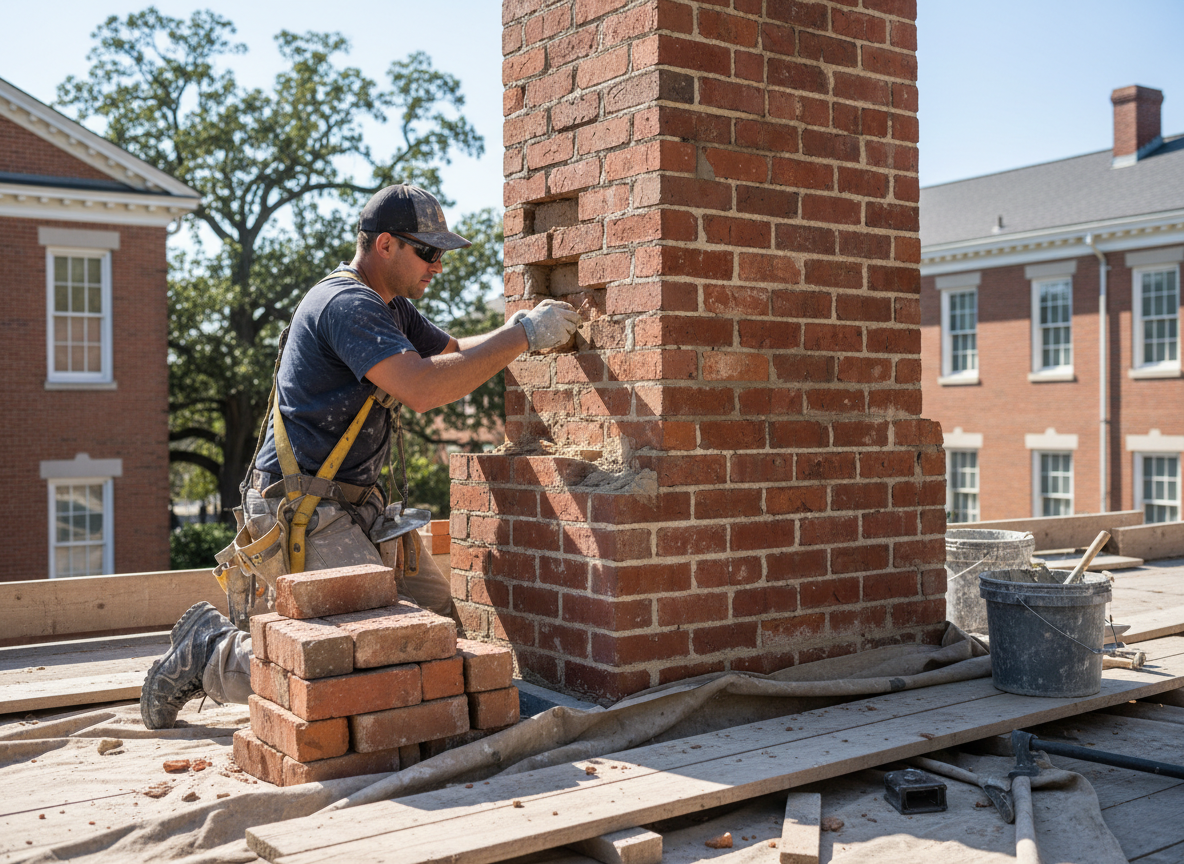
Brick chimneys in Montgomery homes often show mortar deterioration from repeated freeze-thaw cycles that expand and contract joints through winter. Older brickwork in neighborhoods near the Little Miami River faces added moisture retention from soil conditions that keep bases damp longer than upland properties. Matching original brick color and texture requires sourcing from regional suppliers because modern replacements frequently differ in porosity and cause new cracking within a season. Flashing integration at the roofline must account for the steep pitches common on two-story homes built before 1970 to prevent water entry behind the brick.
Edge cases include chimneys that settled unevenly due to clay-heavy soils shifting after heavy spring rains, which tilts the structure and opens vertical cracks. Technicians inspect the flue liner condition during repair because damaged liners allow heat and gases to reach framing in homes where wood is close to the chimney chase. Code requirements in Montgomery County call for proper clearance to combustibles and correct termination height above the roof, so any repair that alters the crown or cap must meet current standards or the homeowner risks inspection failure during resale.
Homeowners sometimes attempt DIY tuckpointing with the wrong mortar mix, which traps moisture inside the wall and accelerates spalling on the next freeze. Professional repair starts with removing failed mortar to sufficient depth, then installing new mortar formulated for exterior exposure and the local temperature swings. Crown sealing and step flashing adjustments are checked at the same time because roof leaks often appear first as interior water stains near the chimney breast.
When multiple faces of the chimney need work, scaffolding setup on sloped yards common in eastern Montgomery adds time compared with flat lots. Material staging must protect existing landscaping because crushed brick and mortar dust stain driveways and patios if not contained. Final inspection includes a smoke test to confirm draft before the crew leaves the site.
Technician insight
In Montgomery, the thing that catches most people out with brick chimney repair is how the clay-heavy soils along the river keep chimney bases damp well into spring, so even small cracks at the foundation turn into full-face rebuilds if the homeowner waits for the next freeze.
Cracked Crown and Loose Flashing
A two-story home near downtown Montgomery showed interior ceiling stains after winter storms. Inspection found a cracked crown and lifted step flashing allowing water behind the brick. The crew rebuilt the crown, reset the flashing, and repointed the upper third of the chimney. No further leaks appeared after the next heavy rain.
How it works
- 1
Site Assessment
Technician examines all four sides of the chimney, checks mortar joints, brick condition, crown, flashing, and any interior signs of water entry.
- 2
Material Preparation
Matching brick and mortar are selected on site, tools and containment are staged to protect roofs, gutters and landscaping.
- 3
Repair Execution
Failed mortar is cut out, new mortar is packed, cracked bricks are replaced, and crown or flashing corrections are made as needed.
- 4
Final Verification
Smoke test confirms draft, all debris is removed, and the homeowner receives a walkthrough of completed work.
Pricing
Upfront quotes based on visible damage and access; larger chimneys or multi-face repairs increase scope.