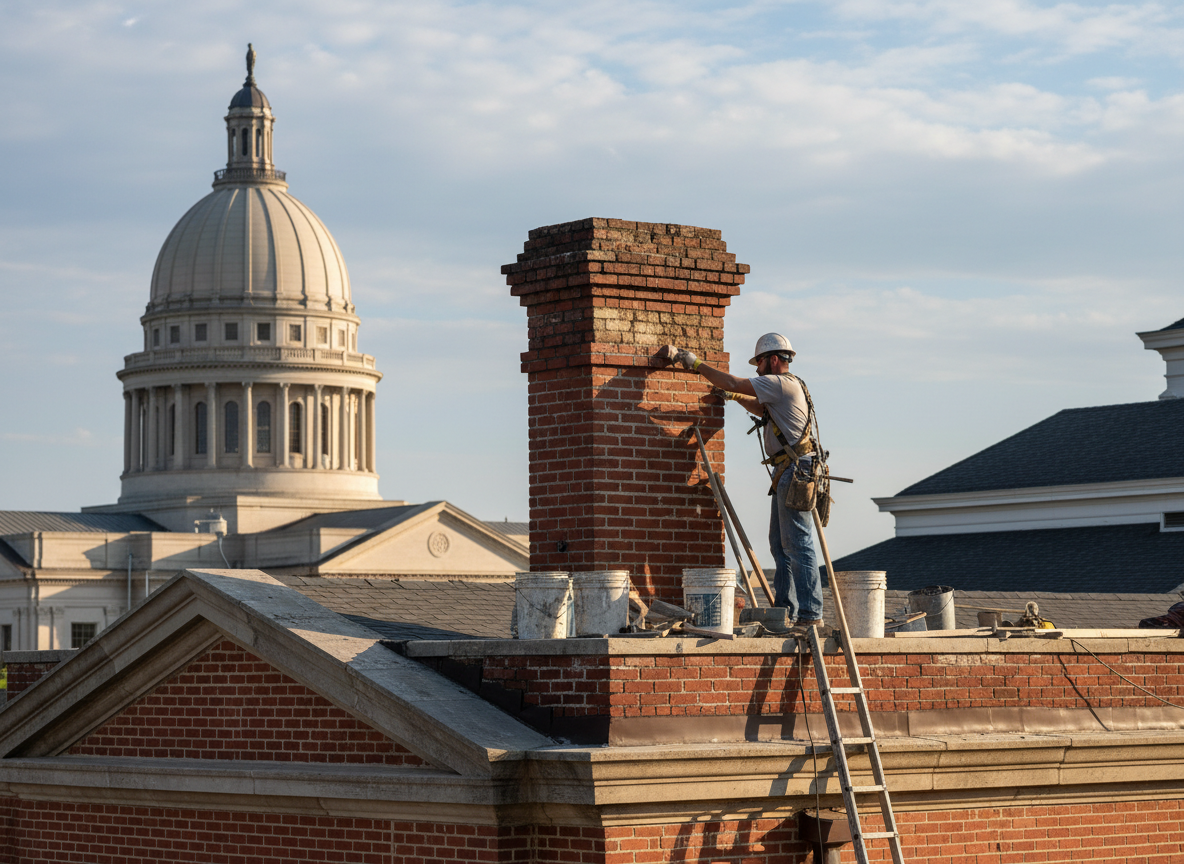
Chimney repair in Montgomery often involves addressing water intrusion through crown cracks and loose flashing, especially on homes built before the 1980s that feature traditional brick stacks. Older masonry tends to shift with seasonal humidity swings, allowing moisture to reach the flue liner and accelerate deterioration. Technicians check for spalling bricks and deteriorated mortar joints that let creosote and rainwater migrate into attic spaces.
Edge cases include chimneys tied into multiple flues or those penetrating low-slope roofs where ponding water accelerates joint failure. Code requirements in the Montgomery area call for proper clearance from combustibles and correct termination height above the roofline. Skipping a full liner inspection during repair can leave hidden cracks that allow carbon monoxide to enter living areas during winter use.
Homeowners frequently overlook the condition of the smoke chamber and damper assembly until draft problems appear. Repair work here must account for the clay soil movement common in the region, which can tilt foundations and stress chimney bases over time. Thorough tuck-pointing with the right mortar mix prevents future water entry without trapping moisture inside the masonry.
Technician insight
In Montgomery, the thing that catches most people out with chimney repair is how the heavy clay soil shifts foundations on older homes, tilting the chimney base and cracking the crown even after surface repairs. Homeowners often focus only on the visible bricks and miss the water that has already reached the attic.
Shifted Base And Crown Leak
A Montgomery homeowner noticed water stains near the fireplace after heavy rain. Inspection revealed a tilted chimney base from soil movement plus cracked crown mortar allowing runoff inside the flue. The crew stabilized the base, rebuilt the crown with proper slope, and repointed joints to restore weather tightness.
How it works
- 1
Initial Inspection
Technician examines the exterior masonry, crown, flashing, and interior flue for damage while noting any draft or odor issues reported by the homeowner.
- 2
Diagnosis And Scope
Findings are reviewed on site to identify whether tuck-pointing, crown rebuild, liner work, or base stabilization is required.
- 3
Repair Execution
Work proceeds with appropriate materials matched to existing brick and mortar, followed by cleanup of debris from the roof and yard.
- 4
Final Check
A post-repair test confirms proper draft and water resistance before the job is completed.
Pricing
Upfront quotes provided after inspection; final cost depends on extent of masonry damage and access.